
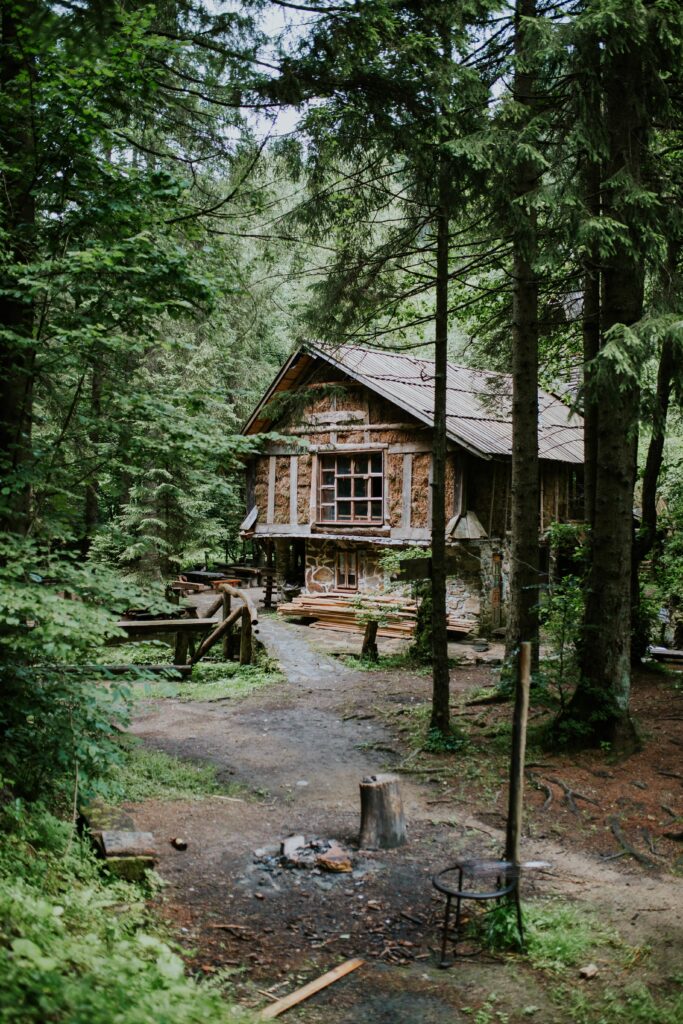
Setting
Before I start writing, I must set the location. An idea formed in my mind brings with it a certain environment and an atmosphere. Guided by my vision, I enter keywords or simply wander the map, visiting towns and cities and strolling the streets with Street View.
This takes time. Once I find a location that closely matches my vision, I delve deeper into the area’s specific characteristics and its history.
I am a big-city person myself. I need the vitality that pulses through them; I need that energy they radiate—something hard to put into words. Yet, while writing Wolf’s Daughter, I knew that a big-city background wouldn’t be the right choice.
My wanderings led me to Oregon, to the town of Joseph, a place rich in both natural beauty and history. I fell in love with it—just as Lilliana.
History
Silver Lake is the town’s original name. It was also referred to as Lake City, but U.S. authorities rejected these names. In 1879, it was officially registered as Joseph.
The town was named in honor of Chief Joseph, also known as Tuekakas (he was baptized in 1839 and given the name “Joseph,” which he bore until his death). The chief was known for his friendly relations with white settlers and played a key role in the 1855 treaty negotiations. His son was baptized Joseph the Younger (Heinmot Tooyalakekt) and represented the town alongside his father.
Joseph is often called “Oregon’s Little Switzerland” because of its forested nature, greenery, and mountains.
Fiction vs Reality
When building a story, I try to blend fiction with reality. Once I have a solid base, I add the details essential to it. I usually create the names of the specific shops or establishments where the action takes place; although the setting might resemble a real-life location, it is not the same thing. Though sometimes I do mention the real ones to bring my story closer to reality.
Details
I pay special attention to detail. Sometimes, a single sentence requires half a day of research to ensure it is well-founded and free of logical errors—especially when it comes to the law.
Probably I don’t need to mention how much time had to be spent examining the laws on the protection of grey wolves.
A gathering of information I’m calling homework. It is an integral part of my writing process. I don’t want to create just any story; I want to create one that I find interesting to write, one that transports me to that other reality. That’s why, with my every book, I look for something new: a setting, a theme, psychological profiles, and the challenges my characters will have to face.